


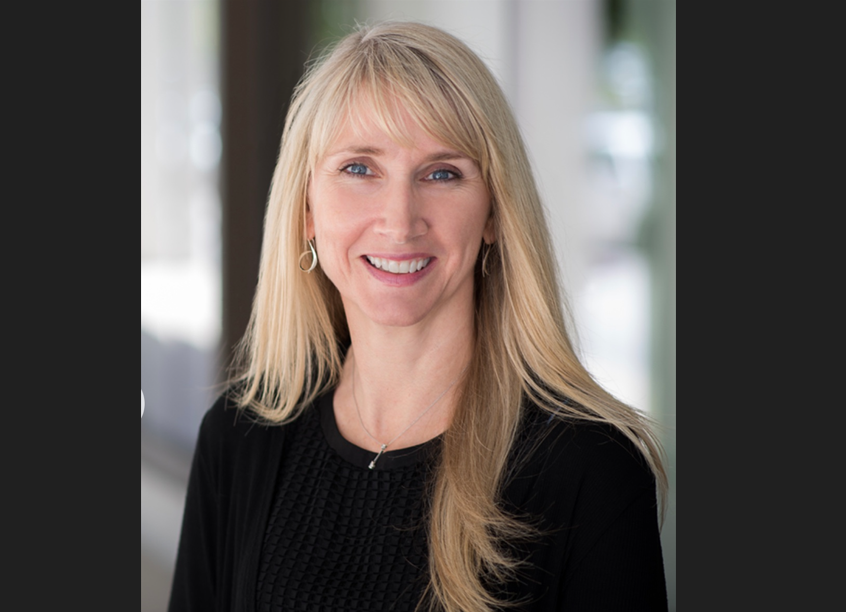
Dr Anita Moon-Grady is a paediatric cardiologist at the University of California, San Francisco. With training in both paediatric cardiology and neonatal/perinatal medicine, Dr Moon-Grady specialises in paediatric and foetal echocardiography (imaging the heart with ultrasound) and intraoperative assessment during congenital cardiac surgery and foetal surgery. Her research interests focus on foetal cardiovascular assessment as well as on cardiac dysfunction in patients with congenital heart disease and in foetuses undergoing surgical intervention, including in multiple gestation pregnancies complicated by twin-to-twin transfusion syndrome. Working with the International Society of Ultrasound in Obstetrics and Gynecology, she is one of the editors of the UOG Special Issue on Congenital Heart Disease, which is to be released this July. Anita also sits on the Every Little Heart Matters Oversight Group.
OGMN: What drove you to choose paediatric cardiology as a career – and paediatric and foetal echocardiography in particular?
AM-G: I look at my life and career as a series of small forays into things I really enjoyed, that all came together to the path I’m on now. In medical school my favourite topics were embryology and cardiovascular physiology and while in paediatric residency I enjoyed most critical illness and our ability, as children, to overcome it with the help of medicine. I did five years of Fellowship, two in neonatal-perinatal medicine and three in cardiology. When I started my first faculty job, all of these seemed to come together, just as ‘foetal cardiology’ was a specialty beginning to define itself. Did I choose it, or did foetal echocardiography choose me? I feel as if I had the background waiting for the specialty to mature.
OGMN: As a clinical researcher, could you tell us more about your current research looking at non-invasive imaging modalities for investigating normal and abnormal cardiac function in patients with congenital heart disease and in foetuses with congenital heart disease and cardiac compromise?
AM-G: I’m really interested in subtle alterations in function and the physiology behind not just congenital heart disease but so many other maternal-foetal conditions. I enjoy using new imaging technologies along with age-old foetal physiology principles to explain an observed difference in outcomes. We have learned so much about neonatal transition and disease progression by studying the prenatal state of and response to intervention in monochorionic twins, volume-loading lesion like teratomas, and using maternal hyperoxygenation to temporarily alter foeto-placental physiology in both normal and abnormal foetal hearts.
OGMN: How could your findings effect the patient experience with regards reproductive care and the fertility journey?
AM-G: I think the greatest impact we can currently have on the patient experience is always going to be the peace-of-mind patients have, that despite receiving a terrifying or devastating diagnosis, they are getting the very best care they can get. We won’t be able to change much for most of the anatomy, but we can improve the lives of the families by helping to alleviate stress and to plan for the best possible outcome for the baby.
OGMN: You are also studying novel ways to use machine learning to improve prenatal detection of heart disease as early as the first trimester. Could you tell us more about what you hope to learn?
AM-G: I think we all know that prenatal detection needs a lot of improvement—there are still babies with HLHS and transposition being born with missed diagnoses. We are hoping to use AI to take the next step, in addition to education, to make these improvements. Beyond that, I can’t say… it’s still in development!
OGMN: What are your thoughts on the advancing involvement of AI and 3D technology in clinics and for patient care?
AM-G: Technology advances are just fun. They engage and excite us, and lead us to ask new questions. Sometimes it doesn’t lead to much clinically—we can after all still make a diagnosis with a 40-year-old platform that only has 2D—but some of these advances do and will make a difference, just like better 2D imaging has advanced foetal cardiac diagnosis into the first trimester. We shall see—AI and 3D are two such different use-cases, I don’t know if I can talk about both in the same answer.
OGMN: We have previously featured an article on the Every Little Heart Matters campaign, as a member of the Oversight Group could you tell us more about the mission, it’s aims and how health professionals can help raise awareness of the campaign?
AM-G: Every Little Heart Matters is a year-long campaign led by ISUOG and joined by other organisations around the world with an overarching aim to raise awareness of CHD and improve rates of prenatal detection in all communities with access to obstetric ultrasound. It’s that simple. Talking about it, publishing a wide array of research articles, opinions, whitepapers, partnering with industry and investigators to bring technology and expertise to underserved populations. I would encourage anyone interested to spend some time looking at the ISUOG ELHM website, exploring the initiatives and seeing how you might be able to help.
OGMN: What’s the best part of your job?
AM-G: Taking beautiful pictures of congenital heart anomalies that I can share with others who are learning and teaching.
OGMN: … and the worst?
AM-G: Breaking the hearts of the families affected by those anomalies. Then helping pick up the pieces and trying to help them make the best decisions they can. It’s difficult, sad, I wish we didn’t have to do it. I wish there was a way to prevent CHD, not just detect it.
OGMN: What has been the highlight of your career so far?
AM-G: I’m still waiting…not done yet!
OGMN: Are you planning to attend or speak at any medical conferences or events in 2026?
AM-G: Of course – teaching and sharing our research with others is the reason I do this. I’ll be at ISUOG in London of course, and the second annual Athens Symposium on Advanced Imaging in CHD in September, the AEPC Fetal Course in Aachen in October, and the International Fetal Medicine and Surgery Society Annual Meeting in Tokyo in October, and the Fetal Heart Society Scientific Sessions in Arizona in November. Taking December off!


SUBSCRIBE TO OBS GYNAE & MIDWIFERY NEWS
and receive all of the latest news via our weekly newsletter
"*" indicates required fields